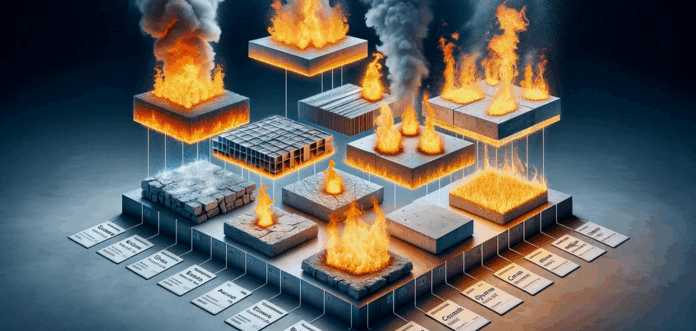
高度難燃性・耐火性コーティング剤と材料の世界市場 2026-2036年The Global Market for Advanced Fire-retardant and Fire-resistant Coatings and Materials 2026-2036 先進的な難燃性・耐火性コーティングおよび材料の世界市場は、広範な防火産業の中で最もダイナミックで急速に発展している分野の一つである。ますます厳しくなる安全規制、交通機関の電動化、バッテリー... もっと見る

出版社
Future Markets, inc.
フューチャーマーケッツインク 出版年月
2025年12月3日
電子版価格
納期
PDF:3-5営業日程度
ページ数
395
図表数
131
言語
英語

サマリー
先進的な難燃性・耐火性コーティングおよび材料の世界市場は、広範な防火産業の中で最もダイナミックで急速に発展している分野の一つである。ますます厳しくなる安全規制、交通機関の電動化、バッテリーエネルギー貯蔵システムの普及に後押しされ、この市場はかつてない成長と技術的変革を遂げている。
難燃性コーティングは、着火を遅らせ、延焼を防ぎ、保護された基材への熱伝導を低減するように設計されています。一方、耐火性コーティングは、完全に発生した火災から保護し、構造物の崩壊を防ぎ、指定された期間、完全性を維持します。同市場には、発煙性・非発煙性塗料、セメント系吹付け製品、鉱物繊維ソリューション、高性能繊維・織物、エアロゲル系断熱材、ナノ工学材料、バイオベースの持続可能な代替材料など、多様な材料技術が含まれている。
同市場は、いくつかの収束要因に牽引され、予測期間2026~2036年にかけて大きく成長すると予測される。電気自動車生産の急速な拡大により、リチウムイオン電池パックの熱暴走を防止できる遮熱材料に対する大きな需要が生まれている。同様に、2024年には年間設置量が45GWhを超えるグリッド規模のバッテリーエネルギー貯蔵システムの世界展開が、主要な成長ドライバーとして浮上している。
建築・建設は依然として最大の伝統的用途分野であり、需要全体のかなりの部分を占めている。更新された建築基準法、EU建設製品規則、国の火災安全基準などの規制枠組みは、商業、住宅、工業構造においてより高いレベルの受動的防火を引き続き義務付けている。石油・ガス産業はもう一つの重要な最終用途分野であり、オフショアプラットフォーム、精製所、LNG施設では、炭化水素火災シナリオに耐えられる特殊な防火ソリューションが必要とされている。
技術面では、薄膜塗布、美観の多様性、鋼構造物の保護における実証済みの性能により、噴気性塗料が引き続き市場を支配している。これらの塗料は、熱にさらされると膨張して絶縁性の炭素質炭化層を形成し、通常、元の厚さの20倍から100倍の膨張率を達成する。しかし、生物濃縮や有毒な燃焼副生成物に対する懸念から、ハロゲン系難燃剤に対する環境規制が強化されるにつれて、リン、窒素、シリコンを主成分とする非炎症性配合物が市場シェアを伸ばしている。
地域的には、急速な工業化、インフラ整備、中国、韓国、日本における電気自動車とバッテリーの製造能力の集中によって、アジア太平洋地域が世界の需要をリードしている。北米と欧州は成熟しつつも成長している市場で、厳しい規制環境と再生可能エネルギー・インフラへの大規模投資によって需要が支えられている。中東・アフリカ地域は、特に石油・ガス用途と大規模建設プロジェクトにおいて、力強い成長の可能性を示している。
同市場は、エアロゲルのような先端材料の高コスト、ポリリン酸アンモニウムや膨張性黒鉛を含む主要原材料のサプライチェーン上の制約、複数の管轄区域にまたがる規制認証の取得に伴う技術的複雑さなど、いくつかの課題に直面している。さらに、ハロゲン系難燃剤からの脱却は、代替化学物質が同等の難燃性能を達成するために高い添加レベルを必要とすることが多いため、配合上の課題となっている。
今後は、ナノ化された配合、スマートな自己修復コーティング、持続可能なバイオベース材料などの技術革新が市場の発展を形作るだろう。メーカーが熱暴走防止と日常的な放熱要件の両方に対応する多機能材料を求めているため、電動化アプリケーションにおける防火と熱管理の統合は大きなチャンスとなる。エネルギー貯蔵の導入が加速し、火災安全事故が規制措置を推進し続ける中、高度難燃性・耐火性コーティングおよび材料市場は、すべての主要用途分野と地域にわたって長期的な持続的成長を遂げる位置にあります。
この調査レポートは、世界の難燃性・耐火性コーティング剤および材料産業を詳細に分析し、2025年から2036年の予測期間を掲載した包括的な市場調査報告書です。世界中で火災安全規制が強化され、電気自動車、バッテリーエネルギー貯蔵システム、航空宇宙分野で新たな用途が出現する中、高度な防火ソリューションへの需要は複数の産業分野で加速し続けています。
本レポートでは、噴気性コーティング、非噴気性配合、セメント系材料、鉱物繊維ソリューション、エアロゲル系断熱材、ナノ加工材料、バイオベースの持続可能な代替材料など、あらゆる防火材料の詳細な市場規模、成長予測、技術評価をお届けします。390ページを超える分析、107のデータ表、24の図表を掲載した本レポートは、防火材料市場の状況を理解するための最も包括的な資料です。
本レポートの主な焦点は、熱暴走防止が重要な安全要件となっている急成長中の電気自動車およびバッテリー蓄電システム分野です。本レポートでは、セルレベルおよびパックレベルの防火戦略、材料強度動向、液浸冷却システム、リチウムイオン電池用途に特有の材料要件について検証しています。主要なBESS火災事故の詳細なケーススタディは、故障モードと進化する規制対応に関する貴重な洞察を提供します。
また、宇宙船防熱システム、文化財防火、電気航空およびeVTOLプラットフォーム、トンネルインフラ、海洋およびオフショア設備、データセンター防火など、新たな用途についても調査しています。各用途分野では、技術要件、材料選択基準、2036年までの市場機会を詳細に分析している。
レポート内容
本レポートでは、難燃性・耐火性コーティングおよび材料市場で活躍する主要企業85社の詳細なプロファイルを掲載しています:3M Company, ABIS Aerogel, ADA Technologies, Aerobel, Aerogel Core, Aerogel Inside, AIS, Akzo Nobel, Alexium, Alkegen, AllCell Technologies, Altek Advanced Materials, AOK Technology, Arclin, Armacell, Asahi Kasei, Ascend Performance Materials, Asheville Mica, Aspen Aerogels, Axalta Coating Systems, Axim Mica, Avanzare Innovacion Tecnologica、BASF、Bass Metals、Belcor、Bergstrom、Blueshift Materials、Cabot Corporation、Carrar、CFP Composites、Cogebi、Denka、Dow、DuPont、Elmelin、Elven Technologies、FibreCoat、Fike Corporation、Fireguardia、FirePro、Fireaway/Stat-X、First Graphene、Freudenberg Sealing Technologies、FUCHS、Fujipoly、Global Graphene Group、H.B.フラー、HeetShield、Hilti Corporation、IBIH Advanced Materials、INCAPTEK、JIOS Aerogel、Johnson Controls、Keey Aerogel、KULR Technology、LG Chem、MAHLE、三菱化学グループ、Morgan Advanced Materials、NanoTech Materialsなど。
目次1 要旨
1.1 市場概要
1.2 高機能難燃性・耐火性塗料・材料の定義と分類
1.3 市場規模および成長予測
1.4 技術進化およびイノベーションの展望
1.5 地域市場分析
1.6 主な成長促進要因と市場抑制要因
1.7 規制
1.8 将来の展望と成長機会
1.9 EVにおける熱暴走と火災
1.10 高機能難燃性・耐火性コーティングおよび材料: 主なカテゴリー
1.11 BESSにおける熱暴走と火災
1.12 素材比較
1.13 膨張性塗料と非膨張性塗料の概要
1.14 材料強度(kg/kWh)
1.15 バッテリーフォームファクター別価格比較
1.16 BESS熱管理および火災安全性市場の概要
2 はじめに
2.1 先進的な難燃性・耐火性コーティングおよび材料とコーティングの進化
2.2 難燃性・耐火性コーティングおよび材料の分類
2.3 難燃性コーティングと耐火性コーティング:定義とメカニズム
2.4 世界の火災安全基準および規制
2.5 防火市場バリューチェーン
2.6 技術即応性評価フレームワーク
2.7 EVにおける火災とリコール
2.8 熱暴走の原因と段階
2.9 防火に関する規制
3 材料とコーティング
3.1 イントゥメッセント塗料および材料
3.1. 動作原理およびメカニズム
3.1.2 製品の種類および配合
3.1.3 酸源(APP、リン酸メラミン)
3.1.4 炭素源(PER、アルカリリグニン、澱粉)
3.1.5 発泡剤(メラミン、膨張性黒鉛)
3.1.6 高分子バインダー
3.1.7 性能特性
3.1.8 最近のイノベーションと今後の展開
3.1.9 ナノエンハンスト噴気性コーティング
3.1.10 コスト構造分析
3.2 非噴気性コーティング
3.2.1 動作原理とメカニズム
3.2.2 ハロゲン系配合物
3.2.3 リン系配合物
3.2.4 窒素系配合物
3.2.5 シリコン系配合物
3.2.6 多元素相乗配合
3.2.7 環境および健康に関する考察
3.3 セメント系材料
3.3.1 配合および技術的特性
3.3. 2 適用方法および技術
3.3.3 性能パラメータ
3.3.4 技術の進歩
3.3.5 比較コスト分析
3.4 ミネラルファイバーベースのソリューション
3.4.1 素材構成および種類
3.4.2 製造工程
3.4.3 性能特性
3.5 高機能繊維およびテキスタイル
3.5.1 素材構成
3.5.2 技術仕様
3.5.3 パフォーマンスベンチマーク
3.5.4 新興技術
3.5.5 用途別適応
3.5.6 繊維用難燃加工
3.6 エアロゲル系断熱材
3.6.1 材料特性および特徴
3.6.2 製造工程
3.6.3 耐火性能
3.6.4 商品化
3.6.5 BESS防火用エアロゲル
3.6.6 F-TPSエアロゲル用途(宇宙船)
3.7 ナノエンジニアリングによる高度な難燃性・耐火性コーティングおよび材料
3.7.1 防火におけるナノ材料
3.7.2 性能向上メカニズム
3.7.3 商業化の課題
3.8 バイオベースおよび持続可能な高度難燃性・耐火性コーティングおよび材料
3.8.1 原材料の供給源および加工
3.8.2 性能特性
3.8.3 環境影響評価
3.8.4 市場対応力と採用障壁
3.8.5 将来開発ロードマップ
3.9 EVバッテリー専用材料
3.9.1 セラミックスと不織布
3.9.2 マイカ材料
3.9.3 EV用途のエアロゲル
3.9.4 耐火性コーティング
3.9.5 封止材および発泡体
3.9.6 相変化マット
3.9.7 耐火テープおよびポリマー
3.10 BESS専用材料
3.10.1 熱インターフェース材料
3.10.2 ポリマーおよびシリコーンフォーム
3.10.3 BESS用サーマルセラミックス
3.10.4 BESS用防火コーティング
3.10.5 熱暴走緩和用セルスペーサー
3.11 アブレーション熱保護材料
3.11.1 アブレーションメカニズム
3.11.2 ハニカムアブレーター(AVCOAT)
3.11.3 PICA(フェノール含浸カーボンアブレーター)
3.11.4 カーボンフェノール
3.11.5 三次元織物TPS(HEEET)
3.12 煙および毒性に関する考察
3.12.1 煙濃度測定
3.12.2 有毒ガス放出(CO、HCN、HCl、NOx)
3.12.3 毒性低減のためのハロゲンフリー配合
3.12.4 煙/毒性に関する規制要件(鉄道用EN 45545、航空規格)
3.12.5 異なる難燃剤化学物質が煙生成に及ぼす影響
3.13 基材別コーティング配合
3.13.1 鋼構造用防火材(浸透性対セメント系)
3.13.2 木材および木材処理(透明対不透明)
3.13.3 コンクリートおよび石工用塗料
3.13.4 複合材料(CFRP、GFRP)
3.13.5 プラスチックおよびポリマー基材
3.13.6 繊維および織物処理
3.14 スマートおよび自己治癒型防火コーティング
3.14.1 自己修復性膨張性コーティング(マイクロカプセル化修復剤)
3.14.2 センサー内蔵のスマートコーティング
3.14.3 温度応答性色変化インジケーター
3.14.4 IoT対応防火モニタリング
3.14.5 ナノエンジニアリング自己修復システム
3.15 塗布方法および装置
3.15.1 スプレー塗布(エアレス、HVLP、静電)
3.15.2 ブラシおよびローラーによる塗布
3.15.3 繊維用ディップコーティング
3.15.4 難燃剤を使用した粉体塗装
3.15.5 自動塗布システム
3.15.6 品質管理および厚さ測定
4 EVにおけるバッテリー保護システム
4.1 セルおよびパックの設計に関する考察
4.1.1 セル・ツー・パック構造
4.1.2 セル・シャーシ設計
4.1.3 大型セルフォーマット
4.1.4 セル・ツー・パックシステムにおける熱暴走
4.2 熱暴走に対する防火材料試験
4.3 材料ベンチマーク
4.3.1 熱特性の比較
4.3.2 電気特性の評価
4.3.18 機械特性の評価
4.3.4 コスト構造分析
4.4 液浸冷却システム
4.4.1 液浸冷却入門
4.4.2 液浸冷却流体要件
4.4.3 アーキテクチャと実装
4.4.4 高機能難燃性および耐火性コーティングおよび材料への影響
5 バッテリーエネルギー貯蔵システム(BESS)火災予防
5.1 BESS市場の概要と火災安全の課題
5.1.1 グリッド規模のBESS
5.1.2 商業・産業(C&I)BESS
5.1.3 住宅用BESS
5.2 BESSの火災事故とケーススタディ
5.3 BESSのパッシブ対アクティブ熱管理
5.4 BESS冷却技術
5.4.1 強制空冷
5.4.2 液体冷却システム
5.4.3 浸漬冷却
5.5 BESS用消火システム
5.5.1 水性システム
5.5.2 凝縮エアロゾルシステム
5.5.3 ガス検知およびオフガスセンサー
5.6 消火ベントシステム
5.7 BESS開発者の戦略
5.8 セカンドライフバッテリーの火災安全性
5.8.1 定置用EVバッテリーの再利用
5.8.2 経年劣化したセルによる追加の火災リスク
5.8.3 試験および認証要件
5.8.4 健康状態(SoH)が熱安定性に及ぼす影響
5.8.5 セカンドライフ用途の防火材料要件
5.9 コンテナ型 BESS 防火
5.9.1 コンテナ型 BESS システムの出荷
5.9.2 コンテナ内の火災抑制
5.9.3 換気および抑制の統合
5.9.4 コンテナ間の間隔要件
5.9.5 ケーススタディ
6. 宇宙船熱防護システム
6.1 大気圏再突入用TPSの紹介
6.2 熱防護システムのカテゴリー
6.3 タイルベースのTPS
6.3.1 シリカベースのタイル
6.3.2 強化カーボン-カーボン(RCC)
6.3.3 TUF4 拡張可能な空力減速機(EAD)
6.4.1 HIAD(極超音速インフレータブル空力減速機)
6.4.2 MDAD(機械展開空力減速機)
6.5 アブレーションTPS
6.6 商用宇宙用途
7 文化遺産の応用
7.1 文化遺産施設における火災リスク
7.2 文化遺産における能動的防火と受動的防火
7.3 歴史的建造物用難燃性塗料
7.3.1 木造構造物およびパネル
7.3.2 歴史的織物
7.3.3 支持材および貯蔵材
7.4 課題と限界
7.5 ケーススタディ
8 用途別市場分析
8.1 建築・建設
8.1.1 住宅建設
8.1.2 商業ビル
8.1.3 産業施設
8.1.4 重要インフラ
8.1.5 改修および改装プロジェクト
8.2 石油・ガス産業
8.2.1 オフショアプラットフォーム
8.2.2 製油所および加工施設
8.3 運輸部門
8.3.1 自動車用途
8.3.2 電気自動車用バッテリーシステム
8.3.3 航空宇宙・航空
8.3.4 海洋・造船
8.3.5 鉄道輸送
8.4 発電
8.5 電池エネルギー貯蔵システム
8.6 従来型発電所
8.6.1 原子力施設
8.6.2 再生可能エネルギーインフラ
8.6.3 エネルギー貯蔵システム
8.7 エレクトロニクスおよび電気通信
8.7.1 データセンター
8.7.2 電子機器および部品
8.7.3 電気通信インフラ
8.7.4 バスバーおよび高圧ケーブル絶縁
8.7.5 技術要件
8.8 航空宇宙
8.9 文化遺産
8.10 トンネルおよび地下インフラ
8.10.1 トンネル火災力学および温度プロファイル
8.10.2 トンネル内張りの防火
8.10.3 トンネル内のケーブル防火
8.10.4 通気と受動的防火の相互作用
8.10.5 地下鉄/サブウェイの用途
8.10. 6 地下のデータセンター保護
8.11 電動航空機およびeVTOL
8.11.1 アーバンエアモビリティ(UAM)のバッテリー火災の課題
8.11.2 重量が重要な防火ソリューション
8.11.3 認証要件(FAA、EASA)
8.11.4 水素燃料電池航空機の防火
8.11.5 航空用バッテリーパックにおける熱暴走伝播
8.12 海洋およびオフショア
8.12.1 SOLAS 防火要件
8.12.2 オフショアプラットフォームの防火(炭化水素火災)
8.12.3 船舶電池室の火災安全性(電気/ハイブリッド船舶)
8.12.4 LNG 船の防火
8.12.5 浮体式風力タービンバッテリーシステム
8.13 データセンターの防火
8.13.1 リチウムイオンUPSバッテリー火災リスク
8.13.2 サーバールーム火災抑制の適合性
8.13. 3 電子機器向けクリーンエージェントシステム
8.13.4 ハイパースケール施設向け防火対策
8.13.5 エッジデータセンターの課題
9 世界市場予測
9.1 全体市場規模および成長率(2025-2036年)
9.2 材料タイプ別市場
9.2.1 膨張性塗料市場
9.2.2 非膨張性塗料市場
9.3 用途別市場
9.4 地域別市場
9.5 エンドユーザー産業別市場
9.6 EV電池需要予測
9.6.1 材料強度予測
9.6.2 セルレベルの高度難燃性・耐火性コーティング剤および材料の予測(2021-2036年)
9.6.3 パックレベルの高度難燃性・耐火性コーティング剤および材料の予測(2021-2036年)
9.6.4 自動車タイプ別高度難燃性・耐火性コーティング剤・材料
9.7 BESS熱管理・防火予測
9.8 宇宙船TPS市場予測
9.9 価格動向と予測
10 規制環境と基準
10.1 世界の火災安全規制
10.2 地域規制枠組み
10.3 産業別規制
10.4 EV電池安全基準
10.5 BESS安全基準
10.6 試験および認証要件
10.7 環境規制
10.8 ハロゲンフリー規制
10.8.1 臭素系難燃剤に関するEU REACH規制
10.8.2 カリフォルニア州プロポジション65
10.8.3 電子機器のRoHS対応
10.8.4 PFASフリー要件
10.8.5 グリーンビルディング認証要件(LEED、BREEAM)
11 企業プロファイル(85社のプロファイル)12. 付録
12.1 調査方法
12.2 略語一覧
12.3 消防試験規格およびプロトコル
12.4 用語集
13 参考文献図表リスト表の一覧
表1 難燃性・耐火性塗料・材料の種類別分類
表2 難燃性・耐火性塗料・材料の世界市場規模、2025-2036年年(10億米ドル)
表3 主要防火材料カテゴリーの性能比較
表4 地域別市場シェアの内訳、2025-2036年 (%)
表5 主な成長促進要因と市場抑制要因
表6 BESS火災安全事象、原因、規制の概要
表7 世界の地域別BESS故障事例(2018-2025年)
表8 インテュメッセントコーティングと非インテュメッセントコーティングの概要
表9 主要用途の材料強度指標(kg/m²)
表10 EVバッテリー用途の材料強度 (kg/kWh)
表11 高機能難燃性および耐火性コーティングおよび材料のカテゴリー別価格比較 (USD/kg)
表12 BESS熱管理および火災安全技術の分類
表13 BESS TM & FP材料のベンチマーキング (耐熱性 vs 熱伝導性)
表14 BESS火災安全システムのベンチマーキング、コスト($/kWh)、商業用途
表15 BESSのTM&FP材料とシステムの価値、億米ドル、2026-2036年
表16 先進的な難燃性・耐火性コーティングおよび材料の進化年表、1950-2025
表17 難燃性コーティングと耐火性コーティングの特性の比較
表18 地域別の世界の主な火災安全規格
表19 EV の主な火災事故とリコール、2018-2024
表20 リチウムイオン電池の熱暴走の段階
表21 リチウムイオン電池の温度と予想される結果
表22 防火に関する規制
表23 噴気性材料の配合と用途
表24 噴気性コーティング用ナノ材料添加剤、
表26 ハロゲン系難燃剤化合物および相乗剤
表27 リン系難燃剤化合物および用途
表28 多元素系難燃剤の配合性能
表29 難燃剤配合タイプの 8 環境影響評価
表30 セメント系防火材料の特性
表31 セメント系材料の性能パラメータ
表32 セメント系材料の比較コスト分析
表33 ミネラルファイバー系ソリューション材料の組成と種類
表34 ミネラルファイバーベースのソリューション 製造工程
表35 ミネラルファイバーベースのソリューション 性能特性
表36 ミネラルファイバーベースのソリューション 比較
表37 高性能織物および繊維の技術仕様
表38 エアロゲルの種類と性能特性
表39 防火に使用されるナノ材料
表40 ナノ工学に基づく高度な難燃性・耐火性コーティングおよび材料の用途
表41 バイオベースの高度な難燃性・耐火性コーティングおよび材料の特性と用途
表42 バイオベースおよび持続可能な高度な難燃性・耐火性コーティングおよび材料の環境影響
表43 バイオベースおよび持続可能な高度な難燃性・耐火性コーティングおよび材料の環境影響
表44 EV バッテリー用セラミックおよび不織布材料の比較
表45 マイカ防火製品の仕様
表46 EV バッテリー用途のエアロゲル製品
表47 バッテリー火災試験におけるエアロゲルの熱性能
表48 熱伝導率と主要材料の耐火性
表49 BESS 熱管理と高度難燃性および耐火性コーティングおよび材料のベンチマーク
表50 BESS 火災安全システムのベンチマーキング(コスト $/kWh)
表51 アブレータ材料ファミリーの比較
表52 応用分野別煙濃度要件
表53 難燃剤タイプ別有毒ガス排出量
表54 基板タイプ別推奨コーティングシステム
表55 基板の適合性および接着要件
表56 スマートコーティング技術と TRL レベル
表57 コーティングの種類と基材による塗布方法
表58 火災定格による乾燥膜厚要件
表59 電池用途の防火材料試験セットアップ
表60 電池構造による重量エネルギー密度(Wh/kg)
表61 EV用途の防火材料試験基準
表62 異なる電池構造における熱暴走伝播パターン
表63 熱伝導率 vs.温度性能
表64 電池用高性能難燃性・耐火性コーティング剤および材料の熱特性比較
表65 液浸冷却液の要件および仕様
表66 EV 電池用液浸冷却システムアーキテクチャ
表67 液浸冷却液の性能比較
表68 電池用高性能難燃性・耐火性コーティング剤および材料の機械的特性比較
表69 BESS 火災事故の概要(2018-2025年)
表70 セカンドライフバッテリー火災リスク要因 vs.EV 電池用高性能難燃性・耐火性コーティング剤および材料
表71 熱保護システムの分類
表72 遺産における能動的防火と受動的防火
表73 建物の種類別の建築防火材料の要件
表74 建物の種類別の防火材料の使用状況
表75 石油・ガス業界防火材料の用途と要件
表76 自動車のタイプ別防火材料の要件
表77 最新の自動車における防火材料の分布
表78 EV バッテリー防火材料の統合ポイント
表79 航空宇宙防火材料の規格と用途、
表80 航空宇宙用途における防火材料の使用状況
表81 発電施設の防火要件
表82 エネルギー貯蔵システムの防火要件
表83 データセンターの防火材料分布
表84 電子部品の防火仕様
表85 バスバーおよびケーブル絶縁材料の比較
表86 トンネルの防火基準(NFPA 502、EU Directive 2004/54)
表87 トンネル用途の高度難燃性および耐火性コーティングおよび材料
表88 eVTOL バッテリー防火要件 vs 地上 EV
表89 航空防火材料の重量比較
表90 海洋防火規格(SOLAS、IMO MSC)
表91 オフショアプラットフォームの防火材料仕様
表92 データセンターの防火システム比較
表93 バッテリールームの防火要件
表94 世界の難燃性および耐火性コーティング剤および材料の地域別市場規模、2025-2036年 (百万米ドル)
表95 難燃性・耐火性コーティング剤・材料の世界市場規模:材料タイプ別、2025-2036年 (百万米ドル)
表96 難燃性・耐火性コーティング剤・材料の世界市場規模:用途別、2025-2036年 (百万米ドル)
表97 難燃性・耐火性コーティング剤・材料の世界市場規模:地域別、2025-2036年 (百万米ドル)
表98 難燃性・耐火性コーティング剤・材料の世界市場規模:エンドユーザー産業別、2025-2036年 (百万米ドル)
表99 セルレベルの防火材料の需要:2025-2036年 (メートルトン)
表100 パックレベルの防火材料の需要:2025-2036年 (メートルトン)
表100 パックレベルの防火材料の需要:2025-2036年 (メートルトン)
表101 高機能難燃性および耐火性コーティング剤および材料の合計予測(質量別)
表102 高機能難燃性および耐火性コーティング剤および材料の合計予測(金額別)
表103 自動車タイプ別の防火材料需要、2025-2036年 (メートル トン)
表104 BESS TM & FP 市場価値予測 2026-2036年
表105 主要材料の平均価格予測、2025-2036年 (USD/kg)
表106 世界のハロゲンフリー規制年表
表107 地域別の制限難燃性物質
図の一覧
図1 世界の難燃性・耐火性塗料・材料の市場規模、2025-2036年 (10億米ドル).
図2 イントゥメッセント・コーティングの拡大メカニズム
図3 防火市場のバリューチェーン
図4 イントゥメッセント材料の作動原理
図5 耐火性エアロゲル
図6 エアロゲルの微細構造と耐火性メカニズム
図7 バイオベースおよび持続可能な高度難燃性・耐火性コーティング剤および材料
図8 防火のための相変化材料の作動メカニズム
図9 セル・ツー・パック・アーキテクチャ
図10 セル・ツー・シャーシの設計原理
図11 防火のための EV バッテリー設計要件
図12 世界の難燃性・耐火性コーティング剤および材料の地域別市場規模、2025-2036年(百万米ドル)
図13 難燃性・耐火性コーティング剤および材料の世界市場規模(材料タイプ別):2025-2036年 (百万米ドル)
図14 難燃性・耐火性コーティング剤・材料の世界市場規模:用途別、2025-2036年 (百万米ドル)
図15 難燃性・耐火性コーティング剤・材料の世界市場規模:地域別、2025-2036年 (百万米ドル)
図16 難燃性・耐火性コーティング剤・材料の世界市場規模:エンドユーザー産業別、2025-2036年(百万米ドル)
図17 EV 用電池の世界需要予測、2025-2036年(GWh)
図18 セルレベルの防火材料の需要、2025-2036年(メートル トン)
図19 熱暴走防止・遅延用アルケゲンプリズムセルスペーサー
図20 パイロシン遮熱板の上に鉛筆を置き、その比較厚さを示す
図21 スレンテックスロール(片)
図22 キーエアロゲル
図23 キーエアロゲルの耐火性
図24 シックスエレメントのグラフェン製品

Summary
The global market for advanced fire-retardant and fire-resistant coatings and materials represents one of the most dynamic and rapidly evolving segments within the broader fire protection industry. Driven by increasingly stringent safety regulations, the electrification of transportation, and the proliferation of battery energy storage systems, this market is experiencing unprecedented growth and technological transformation.
Fire-retardant coatings are designed to delay ignition, prevent flame spread, and reduce heat transfer to protected substrates, while fire-resistant coatings provide protection against fully developed fires, preventing structural collapse and maintaining integrity for specified durations. The market encompasses a diverse range of material technologies including intumescent and non-intumescent coatings, cementitious spray-applied products, mineral fiber solutions, high-performance fabrics and textiles, aerogel-based insulation, nano-engineered materials, and bio-based sustainable alternatives.
The market is projected to grow substantially over the forecast period 2026-2036, driven by several converging factors. The rapid expansion of electric vehicle production has created significant demand for thermal barrier materials capable of preventing thermal runaway propagation in lithium-ion battery packs. Similarly, the global deployment of grid-scale battery energy storage systems, which exceeded 45 GWh of annual installations in 2024, has emerged as a major growth driver.
Building and construction remains the largest traditional application segment, accounting for a substantial portion of overall demand. Regulatory frameworks including updated building codes, the EU Construction Products Regulation, and national fire safety standards continue to mandate higher levels of passive fire protection in commercial, residential, and industrial structures. The oil and gas industry represents another significant end-use sector, with offshore platforms, refineries, and LNG facilities requiring specialized fire protection solutions capable of withstanding hydrocarbon fire scenarios.
From a technology perspective, intumescent coatings continue to dominate the market due to their thin-film application, aesthetic versatility, and proven performance in protecting steel structures. These coatings expand upon heat exposure to form an insulating carbonaceous char layer, typically achieving expansion ratios of 20 to 100 times their original thickness. However, non-intumescent formulations based on phosphorus, nitrogen, and silicon chemistries are gaining market share, particularly as environmental regulations increasingly restrict halogenated flame retardants due to concerns over bioaccumulation and toxic combustion byproducts.
Regionally, Asia-Pacific leads global demand, driven by rapid industrialization, infrastructure development, and the concentration of electric vehicle and battery manufacturing capacity in China, South Korea, and Japan. North America and Europe represent mature but growing markets, with demand supported by stringent regulatory environments and significant investments in renewable energy infrastructure. The Middle East and Africa region shows strong growth potential, particularly in oil and gas applications and large-scale construction projects.
The market faces several challenges including the high cost of advanced materials such as aerogels, supply chain constraints for key raw materials including ammonium polyphosphate and expandable graphite, and the technical complexity of achieving regulatory certification across multiple jurisdictions. Additionally, the transition away from halogenated flame retardants presents formulation challenges, as alternative chemistries often require higher loading levels to achieve equivalent fire performance.
Looking forward, innovation in nano-enhanced formulations, smart self-healing coatings, and sustainable bio-based materials will shape market development. The integration of fire protection with thermal management in electrified applications represents a significant opportunity, as manufacturers seek multifunctional materials that address both thermal runaway prevention and everyday heat dissipation requirements. As energy storage deployments accelerate and fire safety incidents continue to drive regulatory action, the advanced fire-retardant and fire-resistant coatings and materials market is positioned for sustained long-term growth across all major application segments and geographic regions.
This comprehensive market research report provides an in-depth analysis of the global fire-retardant and fire-resistant coatings and materials industry, covering the forecast period 2025-2036. As fire safety regulations tighten worldwide and new applications emerge in electric vehicles, battery energy storage systems, and aerospace, the demand for advanced fire protection solutions continues to accelerate across multiple industry sectors.
The report delivers detailed market sizing, growth projections, and technology assessments for the full spectrum of fire protection materials including intumescent coatings, non-intumescent formulations, cementitious materials, mineral fiber solutions, aerogel-based insulation, nano-engineered materials, and bio-based sustainable alternatives. With over 390 pages of analysis, 107 data tables, and 24 figures, this report represents the most comprehensive resource available for understanding the fire protection materials market landscape.
A key focus of this report is the rapidly growing electric vehicle and battery energy storage system segments, where thermal runaway prevention has become a critical safety requirement. The report examines cell-level and pack-level fire protection strategies, material intensity trends, immersion cooling systems, and the specific material requirements for lithium-ion battery applications. Detailed case studies of major BESS fire incidents provide valuable insights into failure modes and the evolving regulatory response.
The report also explores emerging applications including spacecraft thermal protection systems, cultural heritage fire protection, electric aviation and eVTOL platforms, tunnel infrastructure, marine and offshore installations, and data center fire safety. Each application segment receives detailed analysis of technical requirements, material selection criteria, and market opportunities through 2036.
Report Contents Include
This report features detailed profiles of 85 leading companies active in the fire-retardant and fire-resistant coatings and materials market: 3M Company, ABIS Aerogel, ADA Technologies, Aerobel, Aerogel Core, Aerogel Inside, AIS, Akzo Nobel, Alexium, Alkegen, AllCell Technologies, Altek Advanced Materials, AOK Technology, Arclin, Armacell, Asahi Kasei, Ascend Performance Materials, Asheville Mica, Aspen Aerogels, Axalta Coating Systems, Axim Mica, Avanzare Innovacion Tecnologica, BASF, Bass Metals, Belcor, Bergstrom, Blueshift Materials, Cabot Corporation, Carrar, CFP Composites, Cogebi, Denka, Dow, DuPont, Elmelin, Elven Technologies, FibreCoat, Fike Corporation, Fireguardia, FirePro, Fireaway/Stat-X, First Graphene, Freudenberg Sealing Technologies, FUCHS, Fujipoly, Global Graphene Group, H.B. Fuller, HeetShield, Hilti Corporation, IBIH Advanced Materials, INCAPTEK, JIOS Aerogel, Johnson Controls, Keey Aerogel, KULR Technology, LG Chem, MAHLE, Mitsubishi Chemical Group, Morgan Advanced Materials, NanoTech Materials and more. Table of Contents1 EXECUTIVE SUMMARY
1.1 Market Overview
1.2 Definition and Classification of Advanced Advanced Fire-retardant and Fire-resistant Coatings and Materials
1.3 Market Size and Growth Projections
1.4 Technology Evolution and Innovation Landscape
1.5 Regional Market Analysis
1.6 Key Growth Drivers and Market Restraints
1.7 Regulations
1.8 Future Outlook and Growth Opportunities
1.9 Thermal Runaway and Fires in EVs
1.10 Advanced Fire-retardant and Fire-resistant Coatings and Materials: Main Categories
1.11 Thermal Runaway and Fires in BESS
1.12 Material Comparison
1.13 Intumescent vs Non-Intumescent Coatings Overview
1.14 Material Intensity (kg/kWh)
1.15 Pricing Comparison by Battery Form Factor
1.16 BESS Thermal Management and Fire Safety Market Overview
2 INTRODUCTION
2.1 The Evolution of Advanced Fire-retardant and Fire-resistant Coatings and Materials and Coatings
2.2 Classification of Fire-retardant and Fire-resistant Coatings and Materials
2.3 Fire-retardant vs Fire-resistant Coatings: Definitions and Mechanisms
2.4 Global Fire Safety Standards and Regulations
2.5 Fire Protection Market Value Chain
2.6 Technology Readiness Assessment Framework
2.7 Fires and Recalls in EVs
2.8 Causes and Stages of Thermal Runaway
2.9 Regulations for Fire Protection
3 MATERIALS AND COATINGS
3.1 Intumescent Coatings and Materials
3.1.1 Working Principles and Mechanisms
3.1.2 Product Types and Formulations
3.1.3 Acid Sources (APP, Melamine Phosphate)
3.1.4 Carbon Sources (PER, Alkali Lignin, Starches)
3.1.5 Blowing Agents (Melamine, Expandable Graphite)
3.1.6 Polymeric Binders
3.1.7 Performance Characteristics
3.1.8 Recent Innovations and Future Developments
3.1.9 Nano-enhanced Intumescent Coatings
3.1.10 Cost Structure Analysis
3.2 Non-Intumescent Coatings
3.2.1 Working Principles and Mechanisms
3.2.2 Halogen-Based Formulations
3.2.3 Phosphorus-Based Formulations
3.2.4 Nitrogen-Based Formulations
3.2.5 Silicon-Based Formulations
3.2.6 Multi-Element Synergistic Formulations
3.2.7 Environmental and Health Considerations
3.3 Cementitious Materials
3.3.1 Formulation and Technical Properties
3.3.2 Application Methods and Techniques
3.3.3 Performance Parameters
3.3.4 Technological Advancements
3.3.5 Comparative Cost Analysis
3.4 Mineral Fiber-Based Solutions
3.4.1 Material Composition and Types
3.4.2 Manufacturing Processes
3.4.3 Performance Characteristics
3.5 High-Performance Fabrics and Textiles
3.5.1 Material Composition
3.5.2 Technical Specifications
3.5.3 Performance Benchmarking
3.5.4 Emerging Technologies
3.5.5 Application-Specific Adaptations
3.5.6 Fire-retardant Treatments for Textiles
3.6 Aerogel-Based Insulation
3.6.1 Material Properties and Characteristics
3.6.2 Production Processes
3.6.3 Fire Resistance Performance
3.6.4 Commercialization
3.6.5 Aerogels for BESS Fire Protection
3.6.6 F-TPS Aerogel Applications (Spacecraft)
3.7 Nano-Engineered Advanced Fire-retardant and Fire-resistant Coatings and Materials
3.7.1 Nanomaterials in Fire Protection
3.7.2 Performance Enhancement Mechanisms
3.7.3 Commercialization Challenges
3.8 Bio-Based and Sustainable Advanced Fire-retardant and Fire-resistant Coatings and Materials
3.8.1 Raw Material Sources and Processing
3.8.2 Performance Characteristics
3.8.3 Environmental Impact Assessment
3.8.4 Market Readiness and Adoption Barriers
3.8.5 Future Development Roadmap
3.9 EV Battery-Specific Materials
3.9.1 Ceramics and Non-Wovens
3.9.2 Mica Materials
3.9.3 Aerogels for EV Applications
3.9.4 Fire-Resistant Coatings
3.9.5 Encapsulants and Foams
3.9.6 Phase Change Materials
3.9.7 Fire-Resistant Tapes and Polymers
3.10 BESS-Specific Materials
3.10.1 Thermal Interface Materials
3.10.2 Polymer and Silicone Foams
3.10.3 Thermal Ceramics for BESS
3.10.4 Fire Protection Coatings for BESS
3.10.5 Cell Spacers for Thermal Runaway Mitigation
3.11 Ablative Thermal Protection Materials
3.11.1 Ablation Mechanisms
3.11.2 Honeycomb Ablators (AVCOAT)
3.11.3 PICA (Phenolic Impregnated Carbon Ablator)
3.11.4 Carbon Phenolic
3.11.5 3D Woven TPS (HEEET)
3.12 Smoke and Toxicity Considerations
3.12.1 Smoke density measurements
3.12.2 Toxic gas emissions (CO, HCN, HCl, NOx)
3.12.3 Halogen-free formulations for reduced toxicity
3.12.4 Regulatory requirements for smoke/toxicity (EN 45545 for rail, aviation standards)
3.12.5 Impact of different fire retardant chemistries on smoke production
3.13 Substrate-Specific Coating Formulations
3.13.1 Steel structural fire protection (intumescent vs cementitious)
3.13.2 Wood and timber treatments (transparent vs opaque)
3.13.3 Concrete and masonry coatings
3.13.4 Composite materials (CFRP, GFRP)
3.13.5 Plastic and polymer substrates
3.13.6 Fabric and textile treatments
3.14 Smart and Self-Healing Fire Protection Coatings
3.14.1 Self-healing intumescent coatings (microencapsulated healing agents)
3.14.2 Smart coatings with embedded sensors
3.14.3 Temperature-responsive colour-changing indicators
3.14.4 IoT-enabled fire protection monitoring
3.14.5 Nano-engineered self-repairing systems
3.15 Application Methods and Equipment
3.15.1 Spray application (airless, HVLP, electrostatic)
3.15.2 Brush and roller application
3.15.3 Dip coating for textiles
3.15.4 Powder coating with fire retardants
3.15.5 Automated application systems
3.15.6 Quality control and thickness measurement
4 BATTERY PROTECTION SYSTEMS IN EVs
4.1 Cell and Pack Design Considerations
4.1.1 Cell-to-Pack Architectures
4.1.2 Cell-to-Chassis Designs
4.1.3 Large Cell Formats
4.1.4 Thermal Runaway in Cell-to-Pack Systems
4.2 Fire Protection Material Testing for Thermal Runaway
4.3 Material Benchmarking
4.3.1 Thermal Properties Comparison
4.3.2 Electrical Properties Assessment
4.3.3 Mechanical Properties Evaluation
4.3.4 Cost Structure Analysis
4.4 Immersion Cooling Systems
4.4.1 Introduction to Immersion Cooling
4.4.2 Immersion Cooling Fluid Requirements
4.4.3 Architecture and Implementation
4.4.4 Impact on Advanced Fire-retardant and Fire-resistant Coatings and Materials
5 BATTERY ENERGY STORAGE SYSTEMS (BESS) FIRE PROTECTION
5.1 BESS Market Overview and Fire Safety Challenges
5.1.1 Grid-scale BESS
5.1.2 Commercial & Industrial (C&I) BESS
5.1.3 Residential BESS
5.2 BESS Fire Incidents and Case Studies
5.3 Passive vs Active Thermal Management for BESS
5.4 BESS Cooling Technologies
5.4.1 Forced Air Cooling
5.4.2 Liquid Cooling Systems
5.4.3 Immersion Cooling
5.5 Fire Suppression Systems for BESS
5.5.1 Water-based Systems
5.5.2 Condensed Aerosol Systems
5.5.3 Gas Detection and Off-gas Sensors
5.6 Deflagration Venting Systems
5.7 BESS Developer Strategies
5.8 Second-Life Battery Fire Safety
5.8.1 Repurposed EV batteries for stationary storage
5.8.2 Additional fire risks from aged/degraded cells
5.8.3 Testing and certification requirements
5.8.4 State of Health (SoH) impact on thermal stability
5.8.5 Fire protection material requirements for second-life applications
5.9 Containerized BESS Fire Protection
5.9.1 Shipping container-based BESS systems
5.9.2 Fire containment within containers
5.9.3 Ventilation and suppression integration
5.9.4 Spacing requirements between containers
5.9.5 Case studies
6 SPACECRAFT THERMAL PROTECTION SYSTEMS
6.1 Introduction to TPS for Atmospheric Re-entry
6.2 Categories of Thermal Protection Systems
6.3 Tile-Based TPS
6.3.1 Silica-Based Tiles
6.3.2 Reinforced Carbon-Carbon (RCC)
6.3.3 TUFROC
6.3.4 SpaceX Starship TPS
6.4 Expandable Aerodynamic Decelerators (EADs)
6.4.1 HIAD (Hypersonic InflaTableAerodynamic Decelerators)
6.4.2 MDAD (Mechanically Deployable Aerodynamic Decelerators)
6.5 Ablative TPS
6.6 Commercial Space Applications
7 CULTURAL HERITAGE APPLICATIONS
7.1 Fire Risk in Heritage Facilities
7.2 Active vs Passive Fire Protection in Heritage
7.3 Fire-retardant Coatings for Historic Buildings
7.3.1 Wooden Structures and Panels
7.3.2 Historic Textiles
7.3.3 Support and Storage Materials
7.4 Challenges and Limitations
7.5 Case Studies
8 MARKET ANALYSIS BY APPLICATION
8.1 Building and Construction
8.1.1 Residential Construction
8.1.2 Commercial Buildings
8.1.3 Industrial Facilities
8.1.4 Critical Infrastructure
8.1.5 Retrofit and Renovation Projects
8.2 Oil and Gas Industry
8.2.1 Offshore Platforms
8.2.2 Refineries and Processing Facilities
8.3 Transportation Sector
8.3.1 Automotive Applications
8.3.2 Electric Vehicle Battery Systems
8.3.3 Aerospace and Aviation
8.3.4 Marine and Shipbuilding
8.3.5 Rail Transport
8.4 Power Generation
8.5 Battery Energy Storage Systems
8.6 Conventional Power Plants
8.6.1 Nuclear Facilities
8.6.2 Renewable Energy Infrastructure
8.6.3 Energy Storage Systems
8.7 Electronics and Telecommunications
8.7.1 Data Centers
8.7.2 Electronic Devices and Components
8.7.3 Telecommunications Infrastructure
8.7.4 Busbar and High Voltage Cable Insulation
8.7.5 Technical Requirements
8.8 Aerospace and Space
8.9 Cultural Heritage
8.10 Tunnel and Underground Infrastructure
8.10.1 Tunnel fire dynamics and temperature profiles
8.10.2 Fire protection for tunnel linings
8.10.3 Cable fire protection in tunnels
8.10.4 Ventilation interaction with passive protection
8.10.5 Metro/subway applications
8.10.6 Underground data center protection
8.11 Electric Aviation and eVTOL
8.11.1 Urban Air Mobility (UAM) battery fire challenges
8.11.2 Weight-critical fire protection solutions
8.11.3 Certification requirements (FAA, EASA)
8.11.4 Hydrogen fuel cell aircraft fire protection
8.11.5 Thermal runaway propagation in aviation battery packs
8.12 Marine and Offshore
8.12.1 SOLAS fire protection requirements
8.12.2 Offshore platform fire protection (hydrocarbon fires)
8.12.3 Ship battery room fire safety (electric/hybrid vessels)
8.12.4 LNG carrier fire protection
8.12.5 Floating wind turbine battery systems
8.13 Data Center Fire Protection
8.13.1 Lithium-ion UPS battery fire risks
8.13.2 Server room fire suppression compatibility
8.13.3 Clean agent systems for electronics
8.13.4 Fire protection for hyperscale facilities
8.13.5 Edge data centre challenges
9 GLOBAL MARKET FORECAST
9.1 Overall Market Size and Growth Rate (2025-2036)
9.2 Market by Material Type
9.2.1 Intumescent Coatings Market
9.2.2 Non-Intumescent Coatings Market
9.3 Market by Application
9.4 Market by Region
9.5 Market by End-User Industry
9.6 EV Battery Demand Forecast
9.6.1 Material Intensity Projections
9.6.2 Cell-level Advanced Fire-retardant and Fire-resistant Coatings and Materials Forecast (2021-2036)
9.6.3 Pack-level Advanced Fire-retardant and Fire-resistant Coatings and Materials Forecast (2021-2036)
9.6.4 Advanced Fire-retardant and Fire-resistant Coatings and Materials by Vehicle Type
9.7 BESS Thermal Management and Fire Protection Forecast
9.8 Spacecraft TPS Market Forecast
9.9 Pricing Trends and Forecast
10 REGULATORY LANDSCAPE AND STANDARDS
10.1 Global Fire Safety Regulations
10.2 Regional Regulatory Frameworks
10.3 Industry-Specific Regulations
10.4 EV Battery Safety Standards
10.5 BESS Safety Standards
10.6 Testing and Certification Requirements
10.7 Environmental Regulations
10.8 Halogen-Free Regulations
10.8.1 EU REACH restrictions on brominated flame retardants
10.8.2 California Proposition 65
10.8.3 RoHS compliance for electronics
10.8.4 PFAS-free requirements
10.8.5 Green building certification requirements (LEED, BREEAM)
11 COMPANY PROFILES (85 company profiles)12 APPENDICES
12.1 Research Methodology
12.2 List of Abbreviations
12.3 Fire Testing Standards and Protocols
12.4 Glossary of Terms
13 REFERENCESList of Tables/GraphsList of Tables
Table1 Classification of Fire-retardant and Fire-resistant Coatings and Materials by Type
Table2 Global Fire-retardant and Fire-resistant Coatings and Materials Market Size, 2025-2036 (USD Billion)
Table3 Performance Comparison of Key Fire Protection Material Categories
Table4 Regional Market Share Breakdown, 2025-2036 (%)
Table5 Key Growth Drivers and Market Restraints
Table6 Summary of BESS Fire Safety Events, Causes and Regulations
Table7 Global BESS Failure Incidents by Region (2018-2025)
Table8 Intumescent vs Non-Intumescent Coatings Overview
Table9 Material Intensity Metrics for Key Applications (kg/m²)
Table10 Material Intensity for EV Battery Applications (kg/kWh)
Table11 Price Comparison of Advanced Fire-retardant and Fire-resistant Coatings and Materials by Category (USD/kg)
Table12 BESS Thermal Management and Fire Safety Technology Classification
Table13 BESS TM & FP Materials Benchmarking (Temperature Resistance vs Thermal Conductivity)
Table14 BESS Fire Safety Systems Benchmarking, Costs ($/kWh), Commercial Use
Table15 TM & FP Materials and Systems Value for BESS, US$B, 2026-2036
Table16 Evolution Timeline of Advanced Fire-retardant and Fire-resistant Coatings and Materials, 1950-2025
Table17 Fire-retardant vs Fire-resistant Coating Properties Comparison
Table18 Key Global Fire Safety Standards by Region
Table19 Major EV Fire Incidents and Recalls, 2018-2024
Table20 Stages of Thermal Runaway in Lithium-ion Batteries
Table21 Li-ion Cell Temperature and Likely Outcome
Table22 Regulations for Fire Protection
Table23 Intumescent Material Formulations and Applications
Table24 Nanomaterial Additives for Intumescent Coatings,
Table25 Non-Intumescent Coating Formulation Types
Table26 Halogen-Based Fire Retardant Compounds and Synergists
Table27 Phosphorus-Based Fire Retardant Compounds and Applications
Table28 Multi-Element Fire Retardant Formulation Performance
Table29 8Environmental Impact Assessment of Fire Retardant Formulation Types
Table30 Cementitious Fire Protection Material Properties
Table31 Performance Parameters for Cementitious Materials
Table32 Cementitious Materials Comparative Cost Analysis
Table33 Mineral Fiber-Based Solutions Material Composition and Types
Table34 Mineral Fiber-Based Solutions Manufacturing Processes
Table35 Mineral Fiber-Based Solutions Performance Characteristics
Table36 Mineral Fiber-Based Solutions Comparison
Table37 High-Performance Fabrics and Textiles Technical Specifications
Table38 Aerogel Types and Performance Characteristics
Table39 Nanomaterials used in fire protection
Table40 Nano-Engineered Advanced Fire-retardant and Fire-resistant Coatings and Materials Applications
Table41 Bio-Based Advanced Fire-retardant and Fire-resistant Coatings and Materials Properties and Applications
Table42 Bio-Based and Sustainable Advanced Fire-retardant and Fire-resistant Coatings and Materials Environmental Impact Assessment
Table43 Bio-Based and Sustainable Advanced Fire-retardant and Fire-resistant Coatings and Materials Market Readiness and Adoption Barriers
Table44 Ceramic and Non-Woven Materials Comparison for EV Batteries
Table45 Mica Fire Protection Products Specifications
Table46 Aerogel Products for EV Battery Applications
Table47 Thermal Performance of Aerogels in Battery Fire Tests
Table48 Thermal Conductivity vs. Fire Resistance of Key Materials
Table49 BESS Thermal Management and Advanced Fire-retardant and Fire-resistant Coatings and Materials Benchmarking
Table50 BESS Fire Safety Systems Benchmarking (Costs $/kWh)
Table51 Ablator Material Families Comparison
Table52 Smoke Density Requirements by Application Sector
Table53 Toxic Gas Emissions by Fire Retardant Type
Table54 Recommended Coating Systems by Substrate Type
Table55 Substrate Compatibility and Adhesion Requirements
Table56 Smart Coating Technologies and TRL Levels
Table57 Application Methods by Coating Type and Substrate
Table58 Dry Film Thickness Requirements by Fire Rating
Table59 Fire Protection Material Testing Setup for Battery Applications
Table60 Gravimetric Energy Density by Battery Architecture (Wh/kg)
Table61 Fire Protection Material Test Standards for EV Applications
Table62 Thermal Runaway Propagation Patterns in Different Battery Architectures
Table63 Thermal Conductivity vs. Temperature Performance of Battery Advanced Fire-retardant and Fire-resistant Coatings and Materials
Table64 Thermal Property Comparison of Battery Advanced Fire-retardant and Fire-resistant Coatings and Materials
Table65 Immersion Cooling Fluid Requirements and Specifications
Table66 Immersion Cooling System Architecture for EV Batteries
Table67 Performance Comparison of Immersion Cooling Fluids
Table68 Mechanical Property Comparison of Battery Advanced Fire-retardant and Fire-resistant Coatings and Materials
Table69 BESS Fire Incidents Summary (2018-2025)
Table70 Second-Life Battery Fire Risk Factors vs New Batteries
Table71 Categories of Thermal Protection Systems
Table72 Active vs Passive Fire Protection in Heritage
Table73 Building & Construction Fire Protection Material Requirements by Building Type
Table74 Fire Protection Material Usage by Building Type
Table75 Oil & Gas Industry Fire Protection Material Applications and Requirements
Table76 Automotive Fire Protection Material Requirements by Vehicle Type
Table77 Fire Protection Material Distribution in Modern Vehicles
Table78 EV Battery Fire Protection Material Integration Points
Table79 Aerospace Fire Protection Material Standards and Applications,
Table80 Fire Protection Material Usage in Aerospace Applications
Table81 Power Generation Facility Fire Protection Requirements
Table82 Fire Protection Requirements for Energy Storage Systems
Table83 Data Center Fire Protection Material Distribution
Table84 Electronic Component Fire Protection Specifications
Table85 Busbar and Cable Insulation Materials Comparison
Table86 Tunnel Fire Protection Standards (NFPA 502, EU Directive 2004/54)
Table87 Advanced Fire-retardant and Fire-resistant Coatings and Materials for Tunnel Applications
Table88 eVTOL Battery Fire Protection Requirements vs Ground EVs
Table89 Aviation Fire Protection Material Weight Comparison
Table90 Marine Fire Protection Standards (SOLAS, IMO MSC)
Table91 Offshore Platform Fire Protection Material Specifications
Table92 Data Centre Fire Suppression System Comparison
Table93 Battery Room Fire Protection Requirements
Table94 Global Fire-retardant and Fire-resistant Coatings and Materials Market Size by Region, 2025-2036 (USD Million)
Table95 Global Fire-retardant and Fire-resistant Coatings and Materials Market Size by Material Type, 2025-2036 (USD Million)
Table96 Global Fire-retardant and Fire-resistant Coatings and Materials Market Size by Application, 2025-2036 (USD Million)
Table97 Global Fire-retardant and Fire-resistant Coatings and Materials Market Size by Region, 2025-2036 (USD Million)
Table98 Global Fire-retardant and Fire-resistant Coatings and Materials Market Size by End-User Industry, 2025-2036 (USD Million)
Table99 Cell-level Fire Protection Material Demand, 2025-2036 (Metric Tons)
Table100 Pack-level Fire Protection Material Demand, 2025-2036 (Metric Tons)
Table101 Total Advanced Fire-retardant and Fire-resistant Coatings and Materials Forecast by Mass
Table102 Total Advanced Fire-retardant and Fire-resistant Coatings and Materials Forecast by Value
Table103 Fire Protection Material Demand by Vehicle Type, 2025-2036 (Metric Tons)
Table104 BESS TM & FP Market Value Forecast 2026-2036
Table105 Average Pricing Forecast for Key Materials, 2025-2036 (USD/kg)
Table106 Global Halogen-Free Regulations Timeline
Table107 Restricted Flame Retardant Substances by Region
List of Figures
Figure1 Global Fire-retardant and Fire-resistant Coatings and Materials Market Size, 2025-2036 (USD Billion).
Figure2 Intumescent Coating Expansion Mechanism
Figure3 Fire Protection Market Value Chain
Figure4 Working Principle of Intumescent Materials
Figure5 Fire Resistant Aerogel
Figure6 Aerogel Microstructure and Fire Resistance Mechanism
Figure7 Bio-Based and Sustainable Advanced Fire-retardant and Fire-resistant Coatings and Materials
Figure8 Phase Change Material Working Mechanism for Fire Protection
Figure9 Cell-to-Pack Architecture
Figure10 Cell-to-Chassis Design Principles
Figure11 EV Battery Design Requirements for Fire Protection
Figure12 Global Fire-retardant and Fire-resistant Coatings and Materials Market Size by Region, 2025-2036 (USD Million)
Figure13 Global Fire-retardant and Fire-resistant Coatings and Materials Market Size by Material Type, 2025-2036 (USD Million)
Figure14 Global Fire-retardant and Fire-resistant Coatings and Materials Market Size by Application, 2025-2036 (USD Million)
Figure15 Global Fire-retardant and Fire-resistant Coatings and Materials Market Size by Region, 2025-2036 (USD Million)
Figure16 Global Fire-retardant and Fire-resistant Coatings and Materials Market Size by End-User Industry, 2025-2036 (USD Million)
Figure17 Global EV Battery Demand Forecast, 2025-2036 (GWh)
Figure18 Cell-level Fire Protection Material Demand, 2025-2036 (Metric Tons)
Figure19 Alkegen Prism cell spacers for thermal runaway prevention and delay
Figure20 A pencil resting on a PyroThin thermal barrier to show its comparative thickness
Figure21 SLENTEX® roll (piece)
Figure22 Keey Aerogel
Figure23 Fire-resistance in Keey Aerogel
Figure24 The Sixth Element graphene products
ご注文は、お電話またはWEBから承ります。お見積もりの作成もお気軽にご相談ください。本レポートと同分野(ケミカル)の最新刊レポート
Future Markets, inc.社の アドバンスドマテリアル分野 での最新刊レポート関連レポート(キーワード「コーティング剤」)
よくあるご質問Future Markets, inc.社はどのような調査会社ですか?Future Markets, inc.は先端技術に焦点をあてたスウェーデンの調査会社です。 2009年設立のFMi社は先端素材、バイオ由来の素材、ナノマテリアルの市場をトラッキングし、企業や学... もっと見る 調査レポートの納品までの日数はどの程度ですか?在庫のあるものは速納となりますが、平均的には 3-4日と見て下さい。
注文の手続きはどのようになっていますか?1)お客様からの御問い合わせをいただきます。
お支払方法の方法はどのようになっていますか?納品と同時にデータリソース社よりお客様へ請求書(必要に応じて納品書も)を発送いたします。
データリソース社はどのような会社ですか?当社は、世界各国の主要調査会社・レポート出版社と提携し、世界各国の市場調査レポートや技術動向レポートなどを日本国内の企業・公官庁及び教育研究機関に提供しております。
|
|