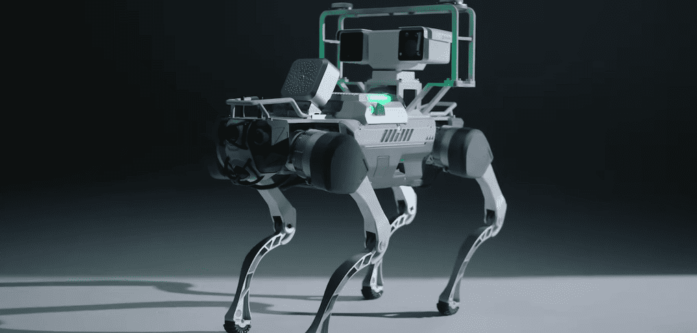
世界の四足歩行ロボット市場 2026-2036年The Global Quadruped Robots Market 2026-2036 世界の四足歩行ロボット市場は、概念実証段階の導入から、世界で最も要求の厳しい産業環境における継続的な収益創出につながる商用運用へと、決定的な転換期を迎えています。この包括的な市場調査レポー... もっと見る


サマリー.png)
世界の四足歩行ロボット市場は、概念実証段階の導入から、世界で最も要求の厳しい産業環境における継続的な収益創出につながる商用運用へと、決定的な転換期を迎えています。この包括的な市場調査レポートは、ハードウェアプラットフォーム、自律性およびAIソフトウェア、システム統合、フリート管理、部品サプライチェーンなど、四足歩行ロボットのエコシステムを2026年から2036年までの11年間の予測期間にわたって詳細に分析しています。
四足歩行ロボットは、動物の歩行動作を模倣するように設計された四足歩行の移動ロボットプラットフォームです。車輪式、履帯式、または航空機による移動ではアクセスが困難または不可能な、起伏のある地形、狭い空間、階段、危険な環境を安定して移動することを可能にします。多自由度駆動関節、搭載センサースイート(LiDAR、RGBカメラ、深度カメラ、慣性測定ユニット、そして近年増加している音響センサー、熱センサー、ガス検知センサーなど)、そしてAI駆動型自律スタックを実行するエッジコンピューティングモジュールを備えた現代の四足歩行ロボットは、検査、巡回、配送、データ収集など、幅広いタスクを階層化できる汎用移動プラットフォームとして機能します。
市場の成長軌道を支える重要な触媒は、レベル2の自律性の出現です。レベル2の自律性では、四足歩行ロボットが最小限の人間の介入で、タスク実行のために計画、移動、位置調整を行うことができます。この変化により、四足歩行ロボットは、専任オペレーターを必要とする遠隔操作ツールから、真に自律的な検査・監視エージェントへと変貌を遂げ、大規模なフリート展開に必要なユニットエコノミクスを実現します。FieldAIやSkild AIといった企業によるロボット基盤モデルの台頭は、現在、四足歩行ロボットハードウェアメーカー全体の時価総額を上回っています。これは、エコシステムの価値がハードウェアからソフトウェアとインテリジェンスへと構造的に移行していることを示しており、これは本レポート全体で詳細に分析されている決定的なトレンドです。
本レポートは、ますます二極化が進む市場における競争動向を検証しています。Unitree Roboticsを筆頭とする中国メーカーは、垂直統合型サプライチェーンと大幅な部品コスト削減により、世界の出荷台数で圧倒的なシェアを占めています。一方、Boston DynamicsやANYboticsといった欧米のプラットフォームは、認証取得レベル(クリーンルーム、ATEXゾーン1)、エンタープライズ統合、そしてグローバルサポートインフラにより、プレミアム価格を実現しています。Ghost Roboticsは、韓国による大規模な防衛関連買収と、複数の基地への米軍配備を背景に、防衛分野に特化した明確なポジションを確立しています。KeyboticやMAB Roboticsといった欧州の競合企業は、それぞれDARPA SubT(潜水艦テスト)で認定された自律性と水中操作といった差別化された機能を、新興産業分野にもたらしています。本レポートは、出荷台数と売上高による市場シェア、競争的ポジショニング、価格動向、製品仕様、戦略的グループ分け、そして業界の軌道を形成するM&Aと資金調達環境について、詳細な分析を提供しています。
本レポートの中心的な特徴は、詳細な部品表(BoM)分析です。中国および欧米のプラットフォームにおけるコンポーネントレベルのコスト内訳、アクチュエーター、センサー、コンピューティング、構造コンポーネント間のコスト指数比較、そして2036年までのコンポーネントコストの推移予測が含まれています。地域分析は、北米、欧州、中国、アジア太平洋(中国を除く)、中東・アフリカ、その他地域を網羅し、主要市場である米国、ドイツ、英国、スイス、韓国、日本、オーストラリア、サウジアラビア、UAEについては国別詳細も提供しています。市場予測は、3つのシナリオ(保守的、基本的、楽観的)に基づいて提示され、アプリケーション、地域、ロボットの種類、コンポーネントごとにセグメント化されています。
レポートの内容
紹介されている企業には、AMC Robotics、Anduril Industries、ANYbotics AG、Boston Dynamics (Hyundai Motor Group)、Chironix、DeepCloud AI、DEEP Robotics、Faraday Future、FieldAI、Formant、General Autonomy、Ghost Robotics などがあります。
目次
1 概要
1.1 市場の概要と定義
1.2 世界市場規模と予測(2026~2036年)
1.3 四足歩行ロボットと他の移動ロボットのフォームファクタ
1.4 四足歩行ロボットの自律性レベル
1.5 地域生態系のダイナミクス
1.5.1 中国:ハードウェアの優位性と製造規模
1.5.2 北米:垂直統合と防衛アプリケーション
1.5.3 ヨーロッパ: 産業検査と安全認証
1.5.4 アジア太平洋地域(中国を除く)、中東、その他の地域
1.6 投資の勢い
1.7 現在の展開状況と商用化の準備状況
1.8 市場の推進要因と課題
1.9 主な調査結果と戦略的意味合い
2 はじめに
2.1 四足歩行ロボットの定義と分類
2.1.1 完全な脚を持つ四足動物
2.1.2 車輪付き脚ハイブリッド四足動物
2.1.3 バイオインスパイアード四足動物
2.2 四足ロボットの歴史的進化
2.2.1 油圧プロトタイプから電動アクチュエータへ
2.2.2 MITチーターの遺産
2.2.3 ボストンダイナミクス:BigDogからSpotへ
2.2.4 ユニツリーと中国のハードウェアメーカーの台頭
2.3 四足歩行のメリット:他の移動プラットフォームに対する利点
2.3.1 四足歩行ロボット vs ドローン
2.3.2 四足歩行ロボットと車輪付きロボット
2.3.3 四足歩行ロボットと履帯ロボット
2.3.4 四足歩行ロボット vs ヒューマノイドロボット
2.4 四足動物の台頭を支えた主な要因
2.4.1 リチウムイオン電池のブレークスルーとコスト削減
2.4.2 油圧アクチュエータから電動アクチュエータへの移行
2.4.3 センサーコストの削減(LiDAR、カメラ、ToF)
2.4.4 コンピューティングの改善: Nvidia Jetson ロードマップ
2.4.5 ソフトウェアとAIの成熟
2.5 ビジネスモデル
2.5.1 ロボット・アズ・ア・サービス(RaaS)
2.5.2 ハードウェア販売(直接購入)
2.5.3 プラットフォームライセンスとソフトウェアサブスクリプション
3 技術評価
3.1 アクチュエータの設計と移動
3.1.1 準ダイレクトドライブ(QDD)アクチュエータ
3.1.2 高比ハーモニックギアボックスおよび遊星ギアボックスアクチュエータ
3.1.3 回転駆動と直線駆動
3.1.4 バックドライバビリティ、コンプライアンス、および地形とのトレードオフ
3.2 センサーと知覚
3.2.1 LiDARシステム
3.2.2 RGBカメラと深度カメラ
3.2.3 飛行時間型(ToF)センサー
3.2.4 慣性計測装置(IMU)
3.2.5 音響センサーと熱センサー
3.2.6 ガス検知センサー
3.2.7 足力/接触センサー
3.3 コンピューティングとエッジAI
3.3.1 オンボードコンピューティングアーキテクチャ
3.3.2 通信バス
3.4 電力システムとバッテリー技術
3.4.1 現在のバッテリーの仕様と制約
3.4.2 電力密度の向上
3.4.3 自律ドッキングと充電
3.5 ソフトウェアアーキテクチャ
3.5.1 制御ループ
3.5.2 ROSとオープンソースフレームワーク
3.5.3 独自のソフトウェアスタック
3.5.4 直接モータ制御とプリセットコントローラ
3.6 自律性とAI
3.6.1 計画、ナビゲーション、ポジショニング
3.6.2 強化学習とシミュレーションから現実世界への転移
3.6.3 ロボット工学の基礎モデル
3.7 安全性、認証、サイバーセキュリティ
3.7.1 IP定格
3.7.2 ATEX/IECEx防爆認証
3.7.3 クリーンルームと低粒子コンプライアンス
3.7.4 サイバーセキュリティとデータ主権
4 部品表分析
4.1 四足歩行ロボットのBoM構造とコストの内訳
4.2 Unitree Go2 BoM の詳細
4.2.1 機械アーキテクチャ
4.2.2 アクチュエータ(モーター、ギアボックス、ドライブ)
4.2.3 センサー
4.2.4 コンピューティング
4.2.5 バッテリー
4.2.6 構造と機械
4.3 Unitree B2 BoM の詳細
4.4 西洋四足動物のBoM推定値
4.5 中国の製造業とサプライチェーンのコスト優位性
4.6 2036年までの部品コスト推移予測
5 アプリケーションと最終用途市場
5.1 石油とガス
5.1.1 上流検査(オフショアプラットフォーム、パイプライン)
5.1.2 下流検査(製油所、石油化学プラント)
5.1.3 防爆要件とATEXゾーン
5.2 半導体製造
5.2.1 ファブおよびサブファブ検査
5.2.2 クリーンルーム統合の課題
5.2.3 ダウンタイムコストの回避
5.3 データセンター
5.3.1 電気ヤード検査
5.3.2 ハイパースケーラー導入シナリオ
5.4 建設
5.4.1 サイトの監視、進捗状況の追跡、デジタルツインの作成
5.4.2 地形ナビゲーション
5.5 採掘
5.6 公益事業とエネルギーインフラ
5.7 セキュリティと監視
5.7.1 境界パトロール
5.8 ラストマイル配送と物流
5.8.1 キャンパスおよび限定エリア配信
5.8.2 倉庫およびフルフィルメントセンターの運営
5.9 防衛と軍事
5.9.1 偵察と監視
5.9.2 競合環境におけるペイロード配信
5.9.3 EODおよびCBRNサポート
5.10 農業
5.11捜索救助/災害対応
5.12 研究と教育
6 四足動物の生態系
6.1 エコシステムアーキテクチャとバリューチェーン
6.2 ハードウェア プラットフォーム プロバイダー
6.3 自律性とモデルベンダー
6.4 システムインテグレーター
6.5 アプリケーション層とフリート管理
6.6 コンポーネントサプライチェーン
6.7 エコシステムのダイナミクスと市場構造
6.7.1 垂直化とプラットフォームベースの戦略
6.7.2 オープンソース研究コミュニティの役割
6.7.3 断片化リスクとハイパースケーラーの問題
7 競争環境
7.1 市場シェア分析
7.2 競争ポジショニングマップ
7.3 価格分析
7.3.1 西洋の価格設定:RaaS(月額約1万ドル)と直接購入
7.3.2 中国の価格優位性(消費者層では最大90%低い)
7.3.3 価格下落の見通し 2026~2036年
7.4 製品仕様の比較
7.5 戦略的グループ分け
7.5.1 垂直統合:ボストンダイナミクス、ANYbotics
7.5.2 ハードウェアファースト / エコシステム: Unitree、DEEP Robotics
7.5.3 防衛重視: ゴーストロボティクス
7.5.4 消費者と研究のクロスオーバー:Xiaomi、Robot Era
7.6 合併、買収、提携(2020-2026年)
7.7 投資と資金調達の状況
8 市場予測 2026-2036年
8.1 世界市場の収益予測
8.2 世界出荷台数予測
8.3 アプリケーション別予測
8.3.1 アプリケーションセグメント分析
8.4 地域別予測
8.5 ロボット種別予測
8.6 コンポーネント別予測
8.7 総アドレス可能市場(TAM)の規模
8.8 平均販売価格予測
9 地域分析
9.1 北米
9.1.1 アメリカ合衆国(防衛、技術、エネルギー)
9.1.2 カナダ
9.2 ヨーロッパ
9.2.1 ドイツ(インダストリー4.0とスマートファクトリー)
9.2.2 イギリス
9.2.3 スイス(ANYbotics、ETHチューリッヒエコシステム)
9.2.4 北欧(石油・ガス、オフショア)
9.2.5 その他のヨーロッパ諸国
9.3 中国
9.3.1 政府の政策、補助金、国家ロボットロードマップ
9.3.2 サプライチェーンと製造上の利点
9.3.3 国内展開と輸出市場
9.3.4 西側諸国のバイヤーにとっての安全保障と地政学的考慮事項
9.4 アジア太平洋(中国を除く)
9.4.1 日本(川崎、ソニー)
9.4.2 韓国(ヒュンダイ/ボストンダイナミクスのシナジー)
9.4.3 オーストラリア(鉱業アプリケーション)
9.5 中東およびアフリカ
9.5.1 サウジアラビアとUAE(石油・ガス、スマートシティの展開)
9.6 その他の地域
10企業プロフィール(30 社プロフィール)
11 付録
11.1 用語集
11.2 研究方法
12 参考文献
図表リスト
表の一覧
表1 世界の四足歩行ロボット市場の収益予測 2026-2036年 (百万米ドル)
表2 比較評価:四足歩行ロボット vs ドローン vs 車輪付きロボット vs 履帯式ロボット vs ヒューマノイドロボット
表3 メーカー別自律レベル展開状況(2026年)
表4 地域市場概要
表5 四足動物関連の主要な資金調達ラウンドと評価(2024-2026年)
表6 市場の推進要因と抑制要因のまとめ
表7 四足ロボットの種類、移動、使用例による分類
表8 MITチータープログラムのタイムライン
表9 Unitree製品の進化
表10 四足ロボットの歴史的発展年表
表11 詳細な性能比較:ロボットタイプ別の主要パラメータ
表12 センサーコストの推移
表13 NVIDIA Jetson のロボット向けコンピューティングの進化
表14 ビジネスモデルの比較
表15 アクチュエータアーキテクチャの比較: QDD vs 高比率 vs SEA
表16 LiDARの仕様とコスト:中国メーカーと欧米メーカーの比較
表17 四足プラットフォームのコンピューティングモジュールの比較
表18 四足歩行モデル別バッテリー仕様
表19 メーカー別自律機能
表20 四足歩行モデル別のIP定格と安全認証
表21 Unitree Go2 Pro 推定部品表
表22 Unitree B2 推定部品表
表23 推定BoMの比較: スポット vs ANYmal vs Unitree B2
表24 2026-2036年におけるカテゴリー別部品コスト削減予測
表25 石油・ガス業界における四足歩行ロボット導入事例
表26 データセンター検査ROIモデル
表27 公共事業およびエネルギーインフラのユースケースと節約額の推定
表28 セキュリティパトロールTCO比較:四足歩行ロボット vs 人間警備員
表29 国別軍事四足歩行プログラム
表30 四足歩行ハードウェアプラットフォームの比較(すべての主要市販モデル)
表31 システムインテグレーターの能力とパートナーエコシステム
表32 四足歩行型成長の影響を受ける主要部品サプライヤー
表33 世界の四足歩行車市場シェア(出荷台数別)(2023-2026年予測)
表34 世界の四足動物市場シェア(収益別)(2023-2026年予測)
表35 2025年出荷台数
表36 モデル別の価格比較:購入価格、RaaS料金、年間TCO
表37 製品仕様比較(現在市販されている四足歩行機すべて)
表38 主要なM&A、パートナーシップ、戦略的提携
表39 主要企業の資金調達ラウンド、評価額、投資家プロフィール
表40 世界の四足歩行ロボット市場の収益2026-2036年(百万米ドル)
表41 世界の四足歩行ロボット出荷台数 2026-2036年
表42 アプリケーションセグメント別収益予測 2026-2036年 (百万米ドル、ベースシナリオ)
表43 2026-2036年の地域別収益予測(百万米ドル、ベースシナリオ)
表44 地域別出荷台数予測 2026-2036年
表45 ロボット種別売上高および台数予測 2026-2036年(ベースシナリオ)
表46 コンポーネント市場規模予測 2026-2036年 (百万米ドル、ベースシナリオ)
表47 浸透率の仮定に基づく業種別TAM分析
表48 ロボットカテゴリー別平均販売価格予測 2026-2036年 (米ドル)
表49 北米市場規模と成長 2026-2036年(百万米ドル、ベース)
表50 ヨーロッパ市場規模と成長 2026-2036年(百万米ドル、ベース)
表51 中国市場規模、国内対輸出収益 2026-2036年(百万米ドル、ベース)
表52 中東における四足歩行ロボットの展開パイプラインとパートナーシップ
表53 ANYbotics: ANYmal製品ラインとANYmal Xロードマップ
表54 ボストン・ダイナミクス:スポット製品の仕様と価格
表55 FieldAI: 資金調達、展開、パートナープラットフォーム
表56 Nvidia Corporation 製品 / テクノロジー
表57 Unitree: 製品ラインの全仕様
図表一覧
図1 四足歩行ロボットのBoMコスト分布:Unitree Go2 vs Boston Dynamics Spot(総部品コストの割合)
図2 コスト指数比較:中国と欧米の四足動物製造業(Unitree Go2 = 100を基準)
図3 四足動物エコシステムバリューチェーンマップ
図5 競争上のポジショニング:価格と機能のマトリックス
図6 世界の四足ロボット市場の収益 2026-2036年 (百万米ドル)
図7 世界の四足歩行ロボット出荷台数 2026-2036年
図8 アプリケーションセグメント別収益予測 2026-2036年 (百万米ドル、ベースシナリオ)
図9 ANYBotics、狭い廊下を通過するANYmal
図10 Lynx M20ロボット図 11 Jueying X30 シリーズ
図12 ゴーストビジョン60
図13 DTシリーズ
図14 Unitree Go2 ロボット犬
図15 ユニツリーB1
図16 Unitree Roboticsの四足歩行ロボットAs2
図17 アルファドッグ
図18 サイバードッグ

Summary
The global quadruped robots market is undergoing a decisive transition from proof-of-concept deployments to recurring, revenue-generating commercial operations across some of the world's most demanding industrial environments. This comprehensive market research report provides an in-depth analysis of the quadruped robotics ecosystem — spanning hardware platforms, autonomy and AI software, system integration, fleet management, and the component supply chain — over an eleven-year forecast horizon from 2026 to 2036.
Quadruped robots are four-legged mobile robotic platforms engineered to replicate animal locomotion, enabling stable navigation across uneven terrain, confined spaces, staircases, and hazardous environments that are inaccessible or impractical for wheeled, tracked, or aerial alternatives. Equipped with multi-degree-of-freedom actuated joints, onboard sensor suites — typically LiDAR, RGB and depth cameras, inertial measurement units, and increasingly acoustic, thermal, and gas detection sensors — and edge computing modules running AI-driven autonomy stacks, modern quadrupeds function as general-purpose mobile platforms onto which a broad range of inspection, patrol, delivery, and data-collection tasks can be layered.
The critical catalyst underpinning the market's growth trajectory is the emergence of Level 2 autonomy — where quadruped robots can plan, navigate, and position themselves for task execution with minimal human intervention. This shift transforms quadrupeds from remotely teleoperated tools requiring dedicated operators into genuinely autonomous inspection and monitoring agents, unlocking the unit economics necessary for large-scale fleet deployments. The rise of robotics foundation models from companies such as FieldAI and Skild AI — whose combined valuations now exceed those of all quadruped hardware manufacturers — signals a structural migration of ecosystem value from hardware toward software and intelligence, a defining trend explored in depth throughout the report.
The report examines the competitive dynamics of an increasingly bifurcated market. Chinese manufacturers, led by Unitree Robotics, dominate global unit shipments through vertically integrated supply chains and dramatically lower bill-of-materials costs, while Western platforms from Boston Dynamics and ANYbotics command premium pricing through certification depth (cleanroom, ATEX Zone 1), enterprise integration, and global support infrastructure. Ghost Robotics occupies a distinct defence-focused position, backed by a major South Korean defence acquisition and US military deployments across multiple installations. European challengers including Keybotic and MAB Robotics bring differentiated capabilities — DARPA SubT-winning autonomy and underwater operation, respectively — to emerging industrial niches. The report provides granular analysis of market share by units and revenue, competitive positioning, pricing dynamics, product specifications, strategic groupings, and the M&A and funding landscape shaping the industry's trajectory.
Detailed bill-of-materials (BoM) analysis is a core feature of the report, with component-level cost breakdowns for Chinese and Western platforms, cost index comparisons across actuators, sensors, compute, and structural components, and projections of component cost trajectories to 2036. Regional analysis covers North America, Europe, China, Asia Pacific (ex-China), the Middle East and Africa, and the Rest of World, with country-level detail for key markets including the United States, Germany, the United Kingdom, Switzerland, South Korea, Japan, Australia, Saudi Arabia, and the UAE. Market forecasts are presented across three scenarios (conservative, base, and optimistic) and segmented by application, region, robot type, and component.
Report Contents
Companies Profiled include AMC Robotics, Anduril Industries, ANYbotics AG, Boston Dynamics (Hyundai Motor Group), Chironix, DeepCloud AI, DEEP Robotics, Faraday Future, FieldAI, Formant, General Autonomy, Ghost Robotics and more..
Table of Contents
1 EXECUTIVE SUMMARY
1.1 Market Overview and Definition
1.2 Global Market Size and Forecast (2026–2036)
1.3 Quadrupeds vs Other Mobile Robot Form Factors
1.4 Levels of Autonomy for Quadruped Robots
1.5 Regional Ecosystem Dynamics
1.5.1 China: Hardware Dominance and Manufacturing Scale
1.5.2 North America: Vertical Integration and Defence Applications
1.5.3 Europe: Industrial Inspection and Safety Certification
1.5.4 Asia Pacific (ex-China), Middle East, and Rest of World
1.6 Investment Momentum
1.7 Current Deployment Status and Commercial Readiness
1.8 Market Drivers and Challenges
1.9 Key Findings and Strategic Implications
2 INTRODUCTION
2.1 Definition and Classification of Quadruped Robots
2.1.1 Fully Legged Quadrupeds
2.1.2 Wheeled-Leg Hybrid Quadrupeds
2.1.3 Bioinspired Quadrupeds
2.2 Historical Evolution of Quadruped Robotics
2.2.1 From Hydraulic Prototypes to Electric Actuators
2.2.2 The MIT Cheetah Legacy
2.2.3 Boston Dynamics: BigDog to Spot
2.2.4 The Rise of Unitree and Chinese Hardware Manufacturers
2.3 Why Quadrupeds: Advantages Over Alternative Mobile Platforms
2.3.1 Quadrupeds vs Drones
2.3.2 Quadrupeds vs Wheeled Robots
2.3.3 Quadrupeds vs Tracked Robots
2.3.4 Quadrupeds vs Humanoid Robots
2.4 Key Enablers of the Rise of Quadrupeds
2.4.1 Li-ion Battery Breakthroughs and Cost Reductions
2.4.2 Transition from Hydraulic to Electric Actuators
2.4.3 Sensor Cost Reductions (LiDAR, Cameras, ToF)
2.4.4 Compute Improvements: The Nvidia Jetson Roadmap
2.4.5 Software and AI Maturation
2.5 Business Models
2.5.1 Robot-as-a-Service (RaaS)
2.5.2 Hardware Sales (Direct Purchase)
2.5.3 Platform Licensing and Software Subscriptions
3 TECHNOLOGY ASSESSMENT
3.1 Actuator Design and Locomotion
3.1.1 Quasi-Direct-Drive (QDD) Actuators
3.1.2 High-Ratio Harmonic and Planetary Gearbox Actuators
3.1.3 Rotary vs Linear Actuation
3.1.4 Backdrivability, Compliance, and the Terrain Trade-off
3.2 Sensors and Perception
3.2.1 LiDAR Systems
3.2.2 RGB and Depth Cameras
3.2.3 Time-of-Flight (ToF) Sensors
3.2.4 Inertial Measurement Units (IMUs)
3.2.5 Acoustic and Thermal Sensors
3.2.6 Gas Detection Sensors
3.2.7 Foot Force/Contact Sensors
3.3 Computing and Edge AI
3.3.1 Onboard Compute Architectures
3.3.2 Communication Buses
3.4 Power Systems and Battery Technology
3.4.1 Current Battery Specifications and Constraints
3.4.2 Power Density Improvements
3.4.3 Autonomous Docking and Charging
3.5 Software Architecture
3.5.1 The Control Loop
3.5.2 ROS and Open-Source Frameworks
3.5.3 Proprietary Software Stacks
3.5.4 Direct Motor Control vs Pre-Set Controllers
3.6 Autonomy and AI
3.6.1 Planning, Navigation, and Positioning
3.6.2 Reinforcement Learning and Sim-to-Real Transfer
3.6.3 Foundation Models for Robotics
3.7 Safety, Certification, and Cybersecurity
3.7.1 IP Ratings
3.7.2 ATEX/IECEx Explosion-Proof Certification
3.7.3 Cleanroom and Low-Particle Compliance
3.7.4 Cybersecurity and Data Sovereignty
4 BILL OF MATERIALS ANALYSIS
4.1 Quadruped BoM Structure and Cost Breakdown
4.2 Unitree Go2 BoM Deep Dive
4.2.1 Mechanical Architecture
4.2.2 Actuators (Motors, Gearboxes, Drives)
4.2.3 Sensors
4.2.4 Computing
4.2.5 Battery
4.2.6 Structure and Mechanical
4.3 Unitree B2 BoM Deep Dive
4.4 Western Quadruped BoM Estimates
4.5 China's Manufacturing and Supply Chain Cost Advantage
4.6 Component Cost Evolution Projections to 2036
5 APPLICATIONS AND END-USE MARKETS
5.1 Oil and Gas
5.1.1 Upstream Inspection (Offshore Platforms, Pipelines)
5.1.2 Downstream Inspection (Refineries, Petrochemical Plants)
5.1.3 Explosion-Proof Requirements and ATEX Zones
5.2 Semiconductor Fabrication
5.2.1 Fab and Subfab Inspection
5.2.2 Cleanroom Integration Challenges
5.2.3 Downtime Cost Avoidance
5.3 Data Centres
5.3.1 Electrical Yard Inspection
5.3.2 Hyperscaler Adoption Scenarios
5.4 Construction
5.4.1 Site Monitoring, Progress Tracking, and Digital Twin Creation
5.4.2 Terrain Navigation
5.5 Mining
5.6 Utilities and Energy Infrastructure
5.7 Security and Surveillance
5.7.1 Perimeter Patrol
5.8 Last-Mile Delivery and Logistics
5.8.1 Campus and Contained-Area Delivery
5.8.2 Warehouse and Fulfilment Centre Operations
5.9 Defence and Military
5.9.1 Reconnaissance and Surveillance
5.9.2 Payload Delivery in Contested Environments
5.9.3 EOD and CBRN Support
5.10 Agriculture
5.11 Search and Rescue / Disaster Response
5.12 Research and Education
6 THE QUADRUPED ECOSYSTEM
6.1 Ecosystem Architecture and Value Chain
6.2 Hardware Platform Providers
6.3 Autonomy and Model Vendors
6.4 System Integrators
6.5 Application Layer and Fleet Management
6.6 Component Supply Chain
6.7 Ecosystem Dynamics and Market Structure
6.7.1 Verticalisation vs Platform-Based Strategies
6.7.2 The Role of the Open-Source Research Community
6.7.3 Fragmentation Risk and the Hyperscaler Question
7 COMPETITIVE LANDSCAPE
7.1 Market Share Analysis
7.2 Competitive Positioning Map
7.3 Pricing Analysis
7.3.1 Western Pricing: RaaS (~$10K/month) vs Direct Purchase
7.3.2 Chinese Pricing Advantage (Up to 90% Lower at Consumer Tier)
7.3.3 Price Erosion Outlook 2026–2036
7.4 Product Specifications Comparison
7.5 Strategic Groupings
7.5.1 Vertically Integrated: Boston Dynamics, ANYbotics
7.5.2 Hardware-First / Ecosystem: Unitree, DEEP Robotics
7.5.3 Defence-Focused: Ghost Robotics
7.5.4 Consumer/Research Crossover: Xiaomi, Robot Era
7.6 Mergers, Acquisitions, and Partnerships (2020–2026)
7.7 Investment and Funding Landscape
8 MARKET FORECASTS 2026–2036
8.1 Global Market Revenue Forecast
8.2 Global Unit Shipment Forecast
8.3 Forecast by Application
8.3.1 Ap plication Segment Analysis
8.4 Forecast by Region
8.5 Forecast by Robot Type
8.6 Forecast by Component
8.7 Total Addressable Market (TAM) Sizing
8.8 Average Selling Price Forecast
9 REGIONAL ANALYSIS
9.1 North America
9.1.1 United States (Defence, Tech, Energy)
9.1.2 Canada
9.2 Europe
9.2.1 Germany (Industry 4.0 and Smart Factories)
9.2.2 United Kingdom
9.2.3 Switzerland (ANYbotics, ETH Zurich Ecosystem)
9.2.4 Nordics (Oil and Gas, Offshore)
9.2.5 Rest of Europe
9.3 China
9.3.1 Government Policy, Subsidies, and the National Robotics Roadmap
9.3.2 Supply Chain and Manufacturing Advantages
9.3.3 Domestic Deployment and Export Markets
9.3.4 Security and Geopolitical Considerations for Western Buyers
9.4 Asia Pacific (ex-China)
9.4.1 Japan (Kawasaki, Sony)
9.4.2 South Korea (Hyundai/Boston Dynamics Synergies)
9.4.3 Australia (Mining Applications)
9.5 Middle East and Africa
9.5.1 Saudi Arabia and UAE (Oil and Gas, Smart City Deployments)
9.6 Rest of World
10 COMPANY PROFILES (30 company profiles)
11 APPENDICES
11.1 Glossary of Terms
11.2 Research Methodology
12 REFERENCES
List of Tables/Graphs
List of Tables
Table1 Global Quadruped Robot Market Revenue Forecast 2026–2036 (USD Million)
Table2 Comparative Assessment: Quadrupeds vs Drones vs Wheeled Robots vs Tracked Robots vs Humanoid Robots
Table3 Autonomy Level Deployment Status by Manufacturer (2026)
Table4 Regional Market Summary
Table5 Major Quadruped-Relevant Funding Rounds and Valuations (2024–2026)
Table6 Summary of Market Drivers and Restraints
Table7 Quadruped Robot Classification by Type, Locomotion, and Use Case
Table8 MIT Cheetah Programme Timeline
Table9 Unitree Product Evolution
Table10 Quadruped Robotics Historical Development Timeline
Table11 Detailed Performance Comparison: Key Parameters by Robot Type
Table12 Sensor Cost Evolution
Table13 Nvidia Jetson Compute Evolution for Robotics
Table14 Business Model Comparison
Table15 Actuator Architecture Comparison: QDD vs High-Ratio vs SEA
Table16 LiDAR Specifications and Costs: Chinese vs Western Suppliers
Table17 Compute Module Comparison for Quadruped Platforms
Table18 Battery Specifications by Quadruped Model
Table19 Autonomy Capabilities by Manufacturer
Table20 IP Ratings and Safety Certifications by Quadruped Model
Table21 Unitree Go2 Pro Estimated Bill of Materials
Table22 Unitree B2 Estimated Bill of Materials
Table23 Estimated BoM Comparison: Spot vs ANYmal vs Unitree B2
Table24 Projected Component Cost Reductions 2026–2036 by Category
Table25 Oil and Gas Quadruped Deployment Case Studies
Table26 Data Centre Inspection ROI Model
Table27 Utility and Energy Infrastructure Use Cases and Savings Estimates
Table28 Security Patrol TCO Comparison: Quadruped Robot vs Human Guard
Table29 Military Quadruped Programmes by Country
Table30 Quadruped Hardware Platform Comparison (All Major Commercial Models)
Table31 System Integrator Capabilities and Partner Ecosystem
Table32 Key Component Suppliers Exposed to Quadruped Growth
Table33 Global Quadruped Market Share by Units Shipped (2023–2026e)
Table34 Global Quadruped Market Share by Revenue (2023–2026e)
Table35 Units Shipped 2025
Table36 Pricing Comparison by Model: Purchase Price, RaaS Rate, Annual TCO
Table37 Full Product Specification Comparison (All Current Commercial Quadrupeds)
Table38 Key M&A, Partnerships, and Strategic Alliances
Table39 Funding Rounds, Valuations, and Investor Profiles for Key Companies
Table40 Global Quadruped Robot Market Revenue 2026–2036 (USD Million)
Table41 Global Quadruped Unit Shipments 2026–2036
Table42 Revenue Forecast by Application Segment 2026–2036 (USD Million, Base Scenario)
Table43 Revenue Forecast by Region 2026–2036 (USD Million, Base Scenario)
Table44 Unit Shipment Forecast by Region 2026–2036
Table45 Revenue and Unit Forecast by Robot Type 2026–2036 (Base Scenario)
Table46 Component Market Size Forecast 2026–2036 (USD Million, Base Scenario)
Table47 TAM Analysis by Vertical with Penetration Rate Assumptions
Table48 ASP Forecast by Robot Category 2026–2036 (USD)
Table49 North America Market Size and Growth 2026–2036 (USD Million, Base)
Table50 Europe Market Size and Growth 2026–2036 (USD Million, Base)
Table51 China Market Size, Domestic vs Export Revenue 2026–2036 (USD Million, Base)
Table52 Middle East Quadruped Deployment Pipeline and Partnerships
Table53 ANYbotics: ANYmal Product Line and ANYmal X Roadmap
Table54 Boston Dynamics: Spot Product Specifications and Pricing
Table55 FieldAI: Funding, Deployments, and Partner Platforms
Table56 Nvidia Corporation Products / Technology
Table57 Unitree: Full Product Line Specifications
List of Figures
Figure1 Quadruped BoM Cost Distribution: Unitree Go2 vs Boston Dynamics Spot (% of total component cost)
Figure2 Cost Index Comparison: Chinese vs Western Quadruped Manufacturing (indexed to Unitree Go2 = 100)
Figure3 Quadruped Ecosystem Value Chain Map
Figure5 Competitive Positioning: Price vs Capability Matrix
Figure6 Global Quadruped Robot Market Revenue 2026–2036 (USD Million)
Figure7 Global Quadruped Unit Shipments 2026–2036
Figure8 Revenue Forecast by Application Segment 2026–2036 (USD Million, Base Scenario)
Figure9 ANYBotics, An ANYmal passing through a narrow corridor
Figure10 Lynx M20 robot
Figure11 Jueying X30 Series
Figure12 Ghost Vision 60
Figure13 DT Series
Figure14 Unitree Go2 Robot Dog
Figure15 Unitree B1
Figure16 Unitree Robotics' quadruped robot As2
Figure17 AlphaDog
Figure18 CyberDog
ご注文は、お電話またはWEBから承ります。お見積もりの作成もお気軽にご相談ください。本レポートと同分野(ケミカル)の最新刊レポート
Future Markets, inc.社の アドバンスドマテリアル分野 での最新刊レポートよくあるご質問Future Markets, inc.社はどのような調査会社ですか?Future Markets, inc.は先端技術に焦点をあてたスウェーデンの調査会社です。 2009年設立のFMi社は先端素材、バイオ由来の素材、ナノマテリアルの市場をトラッキングし、企業や学... もっと見る 調査レポートの納品までの日数はどの程度ですか?在庫のあるものは速納となりますが、平均的には 3-4日と見て下さい。
注文の手続きはどのようになっていますか?1)お客様からの御問い合わせをいただきます。
お支払方法の方法はどのようになっていますか?納品と同時にデータリソース社よりお客様へ請求書(必要に応じて納品書も)を発送いたします。
データリソース社はどのような会社ですか?当社は、世界各国の主要調査会社・レポート出版社と提携し、世界各国の市場調査レポートや技術動向レポートなどを日本国内の企業・公官庁及び教育研究機関に提供しております。
|
|